CI PBT 20 – Polymer Boiler Treatment for Scale Control in Industrial Systems

Polymer Scale Control for Higher-Pressure Steam Boilers and Industrial Systems

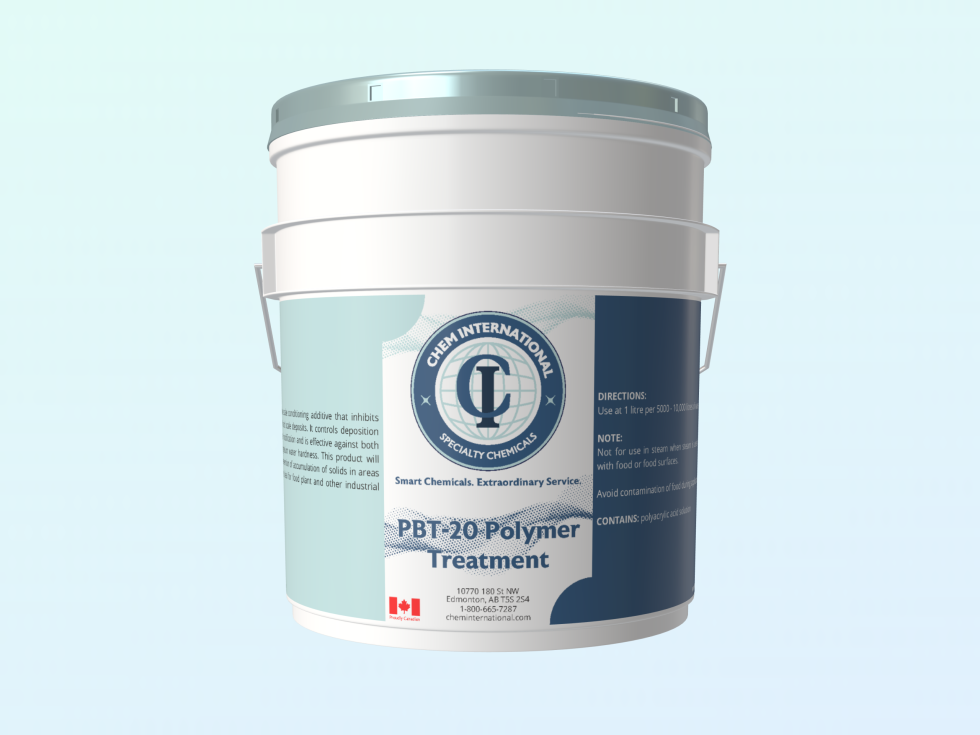
CI PBT 20 is the polymer-based scale treatment for steam boiler systems where phosphate chemistry is not the right fit. It is built for higher-pressure and industrial systems where operators want hardness control without adding phosphate loading to blowdown water or wastewater streams.

Its synthetic polymers condition calcium, magnesium, and other hardness minerals before they can crystallize into the deposits that coat tube walls, restrict flow, and choke heat transfer. Instead of relying on phosphate sequestration, CI PBT 20 keeps hardness dispersed and moving out through blowdown before it bakes onto hot metal surfaces.

Where CI PD90 is the phosphate scale-control option, CI PBT 20 is the polymer alternative for systems where phosphate use is restricted, undesirable, or operationally less attractive. The outcome is the same — hardness stays off the metal, heat transfer stays cleaner, and the boiler stays out of the acid-cleaning cycle longer.

CI PBT 20 is best suited to industrial steam systems that need scale prevention without phosphate chemistry. In practical terms, it helps reduce descaling frequency, preserve thermal efficiency, and support longer equipment life in boilers that run hard and hot.

$297.00 / 20 L pail
+
Technical Data

Technical Data

Technical Properties

CI PBT 20 Polymer Boiler Treatment

Polymer-based scale treatment for steam boiler systems where phosphate chemistry is not the right fit. Built for higher-pressure and industrial systems that need hardness control without adding phosphate loading to blowdown water or wastewater streams.
Product Type
Polymer Boiler Scale Treatment

Technology Base
Synthetic Polymer Scale Conditioning and Dispersion Chemistry

Primary Function
Prevent Hardness Scale from Crystallizing onto Heat-Transfer Surfaces

Application Role
Scale Control for Higher-Pressure Steam Boilers and Industrial Steam Systems

Performance Focus
Hardness Conditioning, Crystal Suppression, and Clean Heat-Transfer Surfaces

Operational Mechanism
Synthetic Polymers Condition Calcium and Magnesium Hardness and Disperse Suspended Solids Before Deposits Can Bake Onto Metal

Process Target
Steam Boiler Tubes, Heat-Transfer Surfaces, and Industrial Boiler Systems Exposed to Hardness Minerals

Operational Benefit
Controls Scale Without Adding Phosphate Chemistry to the Boiler Program

Use Environment
Industrial Boiler Rooms, Manufacturing Plants, Hospitals, Power Stations, and Non-Food-Contact Steam Systems

Program Fit
Polymer-Based Scale-Control Option for Systems Where Phosphate Is Restricted, Undesirable, or Operationally Less Attractive

Maintenance Value
Helps Reduce Descaling Frequency, Preserve Thermal Efficiency, and Extend Boiler Service Life Under Sustained High-Heat Operation

Regulatory / Use Boundary
Not Recommended for Direct Food-Contact Steam · Use PD90 Where Food-Contact Steam Requirements Apply

Operational Notes
• This is the phosphate alternative in the line — built for systems where hardness control is needed but phosphate chemistry is restricted or unwanted
• Instead of phosphate sequestration, synthetic polymers keep hardness from crystallizing into the deposits that coat tube walls and choke heat transfer
• Best used in higher-pressure or industrial steam systems where polymer conditioning is preferred over phosphate treatment
• Distinct from PD90: PD90 is the phosphate scale-control option; PBT 20 is the polymer-based alternative for different regulatory or operating constraints
• Designed to work alongside oxygen scavengers, dispersants, and corrosion inhibitors as part of a layered industrial boiler treatment program
• Same outcome, different mechanism: hardness stays off the metal and leaves through blowdown instead of baking onto hot surfaces

Practical Fit
CI PBT 20 is the scale-control option for industrial steam systems that need polymer performance without phosphate chemistry. It belongs where operators want to keep hardness off the metal, keep the boiler out of the acid-cleaning cycle longer, and control scale in a way that fits higher-pressure service or discharge-sensitive operation.

This block is built from the revised positioning you approved: CI PBT 20 as the polymer-based alternative to PD90 for steam boiler scale control where phosphate chemistry is not the right fit. The product is therefore positioned here for industrial systems that need hardness conditioning and dispersion without phosphate loading, while preserving the catalogue split that keeps PD90 as the phosphate scale-control option and PBT 20 as the polymer alternative.
Documents

Related Documents