Your Cart
No products in the cart.
Free shipping on all orders over $450
Boilers, closed loops and cooling towers fail from the inside — oxygen pitting, hardness scale, microbial fouling. This section covers boiler compounds and oxygen scavengers, cooling water treatments and biocides, inhibited glycol heat-transfer fluids, and the drop-count test kits and reagents operators use to hold a program inside its control window.
Boiler compounds and oxygen scavengers.

Catalyzed sulfite that eliminates dissolved oxygen faster than standard sulfite in steam boilers and high-pressure systems
CI OS100 is the catalyzed oxygen scavenger for steam boiler systems where standard sulfite isn't fast enough. Its sodium sulfite base is enhanced with a proprietary catalyst that accelerates the oxygen-sulfite reaction at lower feedwater temperatures and during the load swings, startups, and fluctuating conditions where uncatalyzed scavengers lag behind and leave tube walls exposed. Where CI SP50 is the standard liquid sulfite scavenger for steady-state steam systems, OS100 is the upgrade for operations where feedwater conditions are less predictable and the operator needs oxygen removed on contact, not minutes later. Dosed into the makeup or feedwater line, it reacts immediately upon contact with dissolved oxygen and maintains consistent sulfite residual in the 50–100 ppm range when monitored properly — neutralizing oxygen before it reaches critical boiler surfaces.
| 20 L | WT009 |
| 20 L | WT009 |
Catalyzed sulfite that eliminates dissolved oxygen faster than standard sulfite in steam boilers and high-pressure systems
CI OS100 is the catalyzed oxygen scavenger for steam boiler systems where standard sulfite isn't fast enough. Its sodium sulfite base is enhanced with a proprietary catalyst that accelerates the oxygen-sulfite reaction at lower feedwater temperatures and during the load swings, startups, and fluctuating conditions where uncatalyzed scavengers lag behind and leave tube walls exposed. Where CI SP50 is the standard liquid sulfite scavenger for steady-state steam systems, OS100 is the upgrade for operations where feedwater conditions are less predictable and the operator needs oxygen removed on contact, not minutes later. Dosed into the makeup or feedwater line, it reacts immediately upon contact with dissolved oxygen and maintains consistent sulfite residual in the 50–100 ppm range when monitored properly — neutralizing oxygen before it reaches critical boiler surfaces.
CI OS100 is the catalyzed oxygen scavenger for steam systems where standard sulfite is too slow for the way the plant actually runs. It belongs where feedwater conditions swing, startups are hard, condensate return matters, and the operator needs oxygen neutralized fast enough to protect the metal before the upset has already done the damage.
A steam boiler program is a sequence, not a single drum. Each step below addresses one failure mode; the products listed are the CI chemistries whose descriptions assign them that role. Selection, dosing and control limits depend on makeup water quality, pressure and condensate return — confirm with CI technical service.

Controlled-pH corrosion inhibitor for aluminum boiler systems
CI Alum Boiler Treatment is built specifically for aluminum hot-water boilers and closed heating loops operating below 900 psi — systems that can be damaged by standard high-pH boiler treatments meant for steel. Its controlled pH around 8 protects aluminum surfaces from chemical attack while the nitrite inhibitor helps prevent oxygen-driven corrosion and internal film loss.
| 20 L | WT003 |
| 20 L | WT003 |
Controlled-pH corrosion inhibitor for aluminum boiler systems
CI Alum Boiler Treatment is built specifically for aluminum hot-water boilers and closed heating loops operating below 900 psi — systems that can be damaged by standard high-pH boiler treatments meant for steel. Its controlled pH around 8 protects aluminum surfaces from chemical attack while the nitrite inhibitor helps prevent oxygen-driven corrosion and internal film loss.
CI Alum Boiler Treatment is the corrosion inhibitor for aluminum boiler systems that cannot tolerate the same chemistry used in ordinary steel loops. It belongs where operators need to protect aluminum surfaces, control oxygen-driven corrosion, and avoid learning the hard way that the wrong treatment can shorten boiler life instead of extending it.

Non-phosphate pre-startup and post-descaling boiler cleaner that removes oil, grease and process contaminants
CI BD86 is the cleaning step that happens before the treatment program starts. New boilers ship with manufacturing oils and greases on internal surfaces. Recently descaled boilers have residual process contaminants left behind after acid cleaning. If those residues stay in the system when the boiler goes into service, they cause foaming, surging, and unstable water levels — operational problems that no corrosion inhibitor or oxygen scavenger can fix because the issue isn't chemistry, it's contamination.
| 20 L | WT011 |
| 20 L | WT011 |
Non-phosphate pre-startup and post-descaling boiler cleaner that removes oil, grease and process contaminants
CI BD86 is the cleaning step that happens before the treatment program starts. New boilers ship with manufacturing oils and greases on internal surfaces. Recently descaled boilers have residual process contaminants left behind after acid cleaning. If those residues stay in the system when the boiler goes into service, they cause foaming, surging, and unstable water levels — operational problems that no corrosion inhibitor or oxygen scavenger can fix because the issue isn't chemistry, it's contamination.
CI BD86 is the boiler cleaning product for operators who understand that treatment chemistry is not magic. It belongs at the front of the program — before startup and after descaling — where the real job is to strip out contamination that would otherwise cause foaming, surging, unstable water levels, and poor treatment performance from day one.

Chelating scale control for boilers on poor-quality makeup water
CI E40 is the heavy-duty scale treatment for boiler systems where the incoming water is bad enough that simpler scale-control chemistry is no longer enough. It is built for boilers taking on poor-quality makeup water with higher hardness or dissolved metals — the kind of water that keeps forming deposits even when a standard phosphate or polymer program is already in place.
| 20 L | WT014 |
| 20 L | WT014 |
Chelating scale control for boilers on poor-quality makeup water
CI E40 is the heavy-duty scale treatment for boiler systems where the incoming water is bad enough that simpler scale-control chemistry is no longer enough. It is built for boilers taking on poor-quality makeup water with higher hardness or dissolved metals — the kind of water that keeps forming deposits even when a standard phosphate or polymer program is already in place.
CI E40 is the heavy-duty scale treatment for operators who are no longer dealing with ordinary water problems. It belongs where poor-quality makeup water keeps defeating lighter scale-control programs and the only sensible move is to bind the hardness and metals hard enough that they never get the chance to plate out on the boiler in the first place.

Neutral-pH pre-startup and post-descaling cleaner for aluminum boilers, condensing heat exchangers and pH-sensitive systems
CI Neutral Boiler Cleaner is BD86's counterpart for aluminum systems — the pre-startup and post-descaling cleaner for boilers and heat exchangers where conventional alkaline detergents would attack the aluminum surfaces they're supposed to be cleaning. Working pH of 7.5 to 8.0 keeps the chemistry within the narrow band that aluminum tolerates, while chelating agents and non-foaming surfactants emulsify and remove the manufacturing oils, installation grease, and organic residues that cause foaming, surging, and poor heat transfer if left inside the system at startup.
| 20 L | 1-WTS765-233 |
| 20 L | 1-WTS765-233 |
Neutral-pH pre-startup and post-descaling cleaner for aluminum boilers, condensing heat exchangers and pH-sensitive systems
CI Neutral Boiler Cleaner is BD86's counterpart for aluminum systems — the pre-startup and post-descaling cleaner for boilers and heat exchangers where conventional alkaline detergents would attack the aluminum surfaces they're supposed to be cleaning. Working pH of 7.5 to 8.0 keeps the chemistry within the narrow band that aluminum tolerates, while chelating agents and non-foaming surfactants emulsify and remove the manufacturing oils, installation grease, and organic residues that cause foaming, surging, and poor heat transfer if left inside the system at startup.
CI Neutral Boiler Cleaner is the aluminum-safe cleaning step that completes the front end of the aluminum boiler program. It belongs where the system has to be clean before treatment starts, but the equipment cannot survive the higher-pH chemistry used on ordinary steel boilers.

Balanced sulfite boiler treatment for hot water boilers and closed systems
CI WT No. 20 is the broad-coverage boiler compound for hot water and chilled water systems built with mixed metals — steel, copper, and brass running in the same loop. Its multi-component chemistry handles several failure modes simultaneously: nitrite forms a protective oxide film against general corrosion, sodium sulfite scavenges dissolved oxygen before it can pit tube walls, phosphates and organophosphonates control scale deposition from hardness minerals, and alkaline agents keep system pH in the protective range for ferrous and non-ferrous metals together.
| 20 L | 1-WTS743-C233 |
| 20 L | 1-WTS743-C233 |
Balanced sulfite boiler treatment for hot water boilers and closed systems
CI WT No. 20 is the broad-coverage boiler compound for hot water and chilled water systems built with mixed metals — steel, copper, and brass running in the same loop. Its multi-component chemistry handles several failure modes simultaneously: nitrite forms a protective oxide film against general corrosion, sodium sulfite scavenges dissolved oxygen before it can pit tube walls, phosphates and organophosphonates control scale deposition from hardness minerals, and alkaline agents keep system pH in the protective range for ferrous and non-ferrous metals together.
CI WT No. 20 is the broad-coverage boiler compound for conventional hot water and chilled water loops where several failure modes can be developing at once. It belongs in systems built from ordinary boiler metals that need one stable treatment program to control oxygen attack, internal corrosion, and hardness deposits before they turn into leaks, fouling, and lost operating efficiency.

Condensate-line corrosion inhibitor for steam distribution and return systems
CI No. 45 is the condensate-side protection for steam systems — the treatment that protects everything downstream of the boiler after the steam leaves the vessel. When steam condenses, dissolved carbon dioxide forms carbonic acid in the return side of the system, and that acid quietly pits condensate lines, traps, and return piping until they leak.
| 20 L | 1-WTS748-20 |
| 20 L | 1-WTS748-20 |
Condensate-line corrosion inhibitor for steam distribution and return systems
CI No. 45 is the condensate-side protection for steam systems — the treatment that protects everything downstream of the boiler after the steam leaves the vessel. When steam condenses, dissolved carbon dioxide forms carbonic acid in the return side of the system, and that acid quietly pits condensate lines, traps, and return piping until they leak.
CI No. 45 is the steam-line corrosion inhibitor for operators who already understand that boiler protection alone is not enough. It belongs in steam programs where the real risk is what happens after the steam condenses — the acid forms, the return side starts disappearing from the inside, and the system corrodes out underneath otherwise well-run boiler chemistry.

Full steam-system corrosion protection from boiler to condensate return
CI No. 49 is the upgraded steam-system corrosion inhibitor for operators who need more than simple acid neutralization in the condensate return. Where No. 45 neutralizes carbonic acid, No. 49 adds a second line of defense: filming amines that lay down a hydrophobic barrier on internal metal surfaces. That means two protection mechanisms working together — neutralizing amines handle the acid chemistry, while filming amines help keep corrosive condensate from contacting the metal in the first place.
| 210 L | WT013 |
| 210 L | WT013 |
Full steam-system corrosion protection from boiler to condensate return
CI No. 49 is the upgraded steam-system corrosion inhibitor for operators who need more than simple acid neutralization in the condensate return. Where No. 45 neutralizes carbonic acid, No. 49 adds a second line of defense: filming amines that lay down a hydrophobic barrier on internal metal surfaces. That means two protection mechanisms working together — neutralizing amines handle the acid chemistry, while filming amines help keep corrosive condensate from contacting the metal in the first place.
CI No. 49 is the condensate-side upgrade for steam systems that keep corroding even after acid neutralization has been addressed. It belongs where operators need more than pH correction — where the return side needs both neutralizing chemistry and a physical protective film to keep condensate from eating the metal underneath it.

Sodium sulfite oxygen scavenger for boiler feedwater
CI OS15 is a concentrated oxygen scavenger for steam boilers , specifically developed to eliminate dissolved oxygen from boiler feedwater and minimize internal corrosion. Using sodium sulfite as the active component, CI OS15 reacts efficiently with oxygen, converting it to inert sulfates and preventing metal loss caused by pitting or oxidation. This oxygen scavenger for steam boilers is effective across a wide range of operating pressures and temperatures, making it suitable for use in industrial, commercial, and institutional boiler systems.
| 20 L | 1-WTS760-233 |
| 20 L | 1-WTS760-233 |
Sodium sulfite oxygen scavenger for boiler feedwater
CI OS15 is a concentrated oxygen scavenger for steam boilers , specifically developed to eliminate dissolved oxygen from boiler feedwater and minimize internal corrosion. Using sodium sulfite as the active component, CI OS15 reacts efficiently with oxygen, converting it to inert sulfates and preventing metal loss caused by pitting or oxidation. This oxygen scavenger for steam boilers is effective across a wide range of operating pressures and temperatures, making it suitable for use in industrial, commercial, and institutional boiler systems.
CI OS15 is a concentrated oxygen scavenger for steam boilers , specifically developed to eliminate dissolved oxygen from boiler feedwater and minimize internal corrosion. Using sodium sulfite as the active component, CI OS15 reacts efficiently with oxygen, converting it to inert sulfates and preventing metal loss caused by pitting or oxidation.
This oxygen scavenger for steam boilers is effective across a wide range of operating pressures and temperatures, making it suitable for use in industrial, commercial, and institutional boiler systems. Its liquid formulation ensures fast dissolution and uniform application, providing more accurate sulfite control and avoiding common problems associated with solid scavengers, such as clumping or dosing inconsistency.
CI OS15 is particularly valuable in systems where maintaining stable sulfite levels is critical for corrosion prevention. When used as directed, it supports continuous operation with minimal scaling or deposit formation, reducing downtime and extending equipment lifespan.
The product is ideal for facilities in power generation , manufacturing , and food processing , where boiler integrity and thermal efficiency are closely tied to system performance. Because it is compatible with most boiler water treatment chemicals, CI OS15 can be used alongside scale inhibitors, pH conditioners, and dispersants as part of a broader treatment program.
Routine water testing is recommended to maintain sulfite concentrations between 50–100 ppm and ensure consistent protection. Samples should be taken prior to blowdown for accurate measurement. When properly applied, CI OS15 helps preserve boiler internals, improve fuel efficiency, and reduce total operating costs.

Polymer scale control for higher-pressure steam boilers and industrial systems
CI PBT 20 is the polymer-based scale treatment for steam boiler systems where phosphate chemistry is not the right fit. It is built for higher-pressure and industrial systems where operators want hardness control without adding phosphate loading to blowdown water or wastewater streams. Its synthetic polymers condition calcium, magnesium, and other hardness minerals before they can crystallize into the deposits that coat tube walls, restrict flow, and choke heat transfer.
| 20 L | 1-WTS772-233 |
| 20 L | 1-WTS772-233 |
Polymer scale control for higher-pressure steam boilers and industrial systems
CI PBT 20 is the polymer-based scale treatment for steam boiler systems where phosphate chemistry is not the right fit. It is built for higher-pressure and industrial systems where operators want hardness control without adding phosphate loading to blowdown water or wastewater streams. Its synthetic polymers condition calcium, magnesium, and other hardness minerals before they can crystallize into the deposits that coat tube walls, restrict flow, and choke heat transfer.
CI PBT 20 is the scale-control option for industrial steam systems that need polymer performance without phosphate chemistry. It belongs where operators want to keep hardness off the metal, keep the boiler out of the acid-cleaning cycle longer, and control scale in a way that fits higher-pressure service or discharge-sensitive operation.

Prevents calcium and magnesium scale before it forms in steam boilers and feedwater systems
CI PD90 is the scale prevention treatment for steam boilers and feedwater lines where calcium and magnesium hardness in the water would otherwise precipitate onto hot metal surfaces as mineral scale — the insulating layer that reduces heat transfer, increases fuel consumption, and eventually leads to tube overheating and failure. Active phosphate compounds sequester hardness ions and keep them in solution so they leave the system through blowdown instead of baking onto tube walls.
| 20 L | 1-WTS770-233 |
| 20 L | 1-WTS770-233 |
Prevents calcium and magnesium scale before it forms in steam boilers and feedwater systems
CI PD90 is the scale prevention treatment for steam boilers and feedwater lines where calcium and magnesium hardness in the water would otherwise precipitate onto hot metal surfaces as mineral scale — the insulating layer that reduces heat transfer, increases fuel consumption, and eventually leads to tube overheating and failure. Active phosphate compounds sequester hardness ions and keep them in solution so they leave the system through blowdown instead of baking onto tube walls.
CI PD90 is the scale-prevention piece of the boiler program for operators who know hard water does not need much time on a hot surface to become a fuel-cost problem. It belongs where the job is to keep calcium and magnesium off the metal, keep heat moving through the boiler the way it should, and stop the system from drifting toward the kind of scale that eventually forces an acid cleanout.

Eliminates dissolved oxygen before it pits tubes and drums in steam boilers and high-condensate systems
CI SP50 is the oxygen scavenger for steam boiler systems — it chemically reacts with dissolved oxygen in the feedwater and removes it before it reaches tube walls, drums, and piping where it causes pitting corrosion that leads to tube failures, unplanned shutdowns, and expensive pressure-part replacements. Dissolved oxygen is one of the most destructive forces inside a steam boiler, and every other treatment in the program is compromised if oxygen isn't controlled first.
| 20 kg | 1-WTS764-20 |
| 20 kg | 1-WTS764-20 |
Eliminates dissolved oxygen before it pits tubes and drums in steam boilers and high-condensate systems
CI SP50 is the oxygen scavenger for steam boiler systems — it chemically reacts with dissolved oxygen in the feedwater and removes it before it reaches tube walls, drums, and piping where it causes pitting corrosion that leads to tube failures, unplanned shutdowns, and expensive pressure-part replacements. Dissolved oxygen is one of the most destructive forces inside a steam boiler, and every other treatment in the program is compromised if oxygen isn't controlled first.
CI SP50 is the oxygen scavenger for steam boilers where reliability depends on stopping pitting before it starts. It belongs in steam programs that need clean liquid feed, stable dosing, and direct oxygen removal instead of assuming a passivating boiler compound can do a different job by itself.

Prevents oxygen pitting and internal corrosion in closed-loop and hot water systems on softened water
CI WT No. 25 is the focused nitrite treatment for closed-loop and hot water systems operating under 900 psi where the water is already softened and the loop does not need a broader multi-mode treatment package. Sodium nitrite builds a passivating oxide film on internal metal surfaces, EDTA chelates trace hardness that gets past the softener, and sodium hydroxide holds pH and alkalinity in the protective range — three jobs, clean chemistry, nothing extra in the drum.
| 20 L | 1-WTS744-236 |
| 20 L | 1-WTS744-236 |
Prevents oxygen pitting and internal corrosion in closed-loop and hot water systems on softened water
CI WT No. 25 is the focused nitrite treatment for closed-loop and hot water systems operating under 900 psi where the water is already softened and the loop does not need a broader multi-mode treatment package. Sodium nitrite builds a passivating oxide film on internal metal surfaces, EDTA chelates trace hardness that gets past the softener, and sodium hydroxide holds pH and alkalinity in the protective range — three jobs, clean chemistry, nothing extra in the drum.
CI WT No. 25 is the clean nitrite choice for operators running a simpler closed loop on softened water. It belongs where the job is not to solve every water-side problem at once, but to maintain reliable passivation on internal metal surfaces and stop oxygen-driven corrosion before it becomes a leak, a fouled loop, or a heat-transfer problem.

Molybdate corrosion inhibitor for closed-loop heating, chilled water, and steam boiler systems
CI WT No. 34 is the molybdate-based treatment for chilled water loops, hot water systems, and low- to moderate-pressure steam boilers that operate under variable temperatures, changing flow rates, and intermittent stagnation. Sodium molybdate forms a stable protective oxide film on internal metal surfaces, making it a strong choice where the operator wants dependable passivation across operating conditions that are less steady than a conventional closed loop.
| 20 L | WT004 |
| 20 L | WT004 |
Molybdate corrosion inhibitor for closed-loop heating, chilled water, and steam boiler systems
CI WT No. 34 is the molybdate-based treatment for chilled water loops, hot water systems, and low- to moderate-pressure steam boilers that operate under variable temperatures, changing flow rates, and intermittent stagnation. Sodium molybdate forms a stable protective oxide film on internal metal surfaces, making it a strong choice where the operator wants dependable passivation across operating conditions that are less steady than a conventional closed loop.
CI WT No. 34 is the molybdate passivation treatment for systems that do not live under textbook conditions. It belongs where flow changes, temperatures drift, sections of the loop sit idle, and the operator needs corrosion protection to stay in place when a more conventional treatment profile may not be the strongest fit.

Dual molybdate-nitrite corrosion inhibitor for closed-loop hot water and chilled water systems
CI WT No. 38 is the dual-inhibitor treatment for closed-loop hot water and chilled water systems where the operator wants both fast passivation and long-film stability in one drum. It combines sodium nitrite, which rapidly passivates ferrous metal surfaces, with sodium molybdate, which helps maintain a more durable protective film over time. That makes it a strong fit for closed hydronic loops where corrosion and mineral deposition quietly reduce flow, cut heat-transfer efficiency, and shorten the life of pumps, piping, and heat exchangers.
| 20 L | WT006 |
| 20 L | WT006 |
Dual molybdate-nitrite corrosion inhibitor for closed-loop hot water and chilled water systems
CI WT No. 38 is the dual-inhibitor treatment for closed-loop hot water and chilled water systems where the operator wants both fast passivation and long-film stability in one drum. It combines sodium nitrite, which rapidly passivates ferrous metal surfaces, with sodium molybdate, which helps maintain a more durable protective film over time. That makes it a strong fit for closed hydronic loops where corrosion and mineral deposition quietly reduce flow, cut heat-transfer efficiency, and shorten the life of pumps, piping, and heat exchangers.
CI WT No. 38 is the dual-inhibitor answer for closed hot water and chilled water loops where the operator wants fast passivation at startup and stronger film persistence over time. It belongs in recirculating closed systems only — not steam — where the chemistry stays in the loop and both inhibitor mechanisms can do their job together.
Cooling water treatments and biocides.
A cooling water compound does not control biological growth, and a biocide does not control scale or corrosion. A complete open-tower program runs one product from each lane, with test kits to hold the scale-and-corrosion lane inside its window.

Bronopol shock biocide for cooling towers, closed loops, and process water systems
Fast-acting broad-spectrum microbiocide built on 10% bronopol ( PCP #21153.18 ). Non-ionic, non-foaming, odorless, and effective across varying pH conditions — a useful fit in open cooling towers, closed heating and cooling loops, and humidification spray pans where biological growth has to be controlled without adding foam or odor.
| 20 L | 102714 |
| 20 L | 102714 |
Bronopol shock biocide for cooling towers, closed loops, and process water systems
Fast-acting broad-spectrum microbiocide built on 10% bronopol ( PCP #21153.18 ). Non-ionic, non-foaming, odorless, and effective across varying pH conditions — a useful fit in open cooling towers, closed heating and cooling loops, and humidification spray pans where biological growth has to be controlled without adding foam or odor.
CI B-10 Biocide is the fast-acting bronopol shock biocide for systems where bacterial growth has to be knocked down cleanly without adding foam, odor, or incompatible chemistry to the water treatment program. It belongs alongside the cooling water treatment compound, not in place of it.

Glutaraldehyde microbiocide for slime, SRB, and algae in recirculating cooling and process water systems
Registered microbiocide ( PCP #31043 ) based on 15% glutaraldehyde for control of slime-forming bacteria, sulfate-reducing bacteria, and algae in open recirculating cooling water, air washers, industrial scrubbing systems, service water, and heat-transfer systems including evaporative condensers, hydrostatic sterilizers and retorts, and pasteurizers. Designed for programs that need two separate operating modes: slug-dose cleanup when a system is already fouled, and continuous maintenance feed once control has been established.
| 20 L | WT019 |
| 20 L | WT019 |
Glutaraldehyde microbiocide for slime, SRB, and algae in recirculating cooling and process water systems
Registered microbiocide ( PCP #31043 ) based on 15% glutaraldehyde for control of slime-forming bacteria, sulfate-reducing bacteria, and algae in open recirculating cooling water, air washers, industrial scrubbing systems, service water, and heat-transfer systems including evaporative condensers, hydrostatic sterilizers and retorts, and pasteurizers. Designed for programs that need two separate operating modes: slug-dose cleanup when a system is already fouled, and continuous maintenance feed once control has been established.
CI Gluticide 15 belongs in recirculating cooling and process water systems where biological fouling is already affecting performance or clearly trending that way. It is the glutaraldehyde microbiocide for programs that need both a real cleanup mode and a steady maintenance mode, while the cooling water compound continues handling scale and corrosion.

Scale and corrosion treatment for open recirculating cooling towers running a monitored control program
Concentrated cooling water treatment for open recirculating cooling towers and condenser feed water. Anti-scaling agents combined with cathodic and anodic inhibitors protect steel and soft metals while supporting higher cycles of concentration through alkalinity control. Best positioned for monitored programs where the operator is tracking a full control window: pH 7.5–8.5, conductivity 900–950 µmhos, M-alkalinity 50–150 ppm, and phosphonate residual at 25–30 ppm as AMP (NTP), or orthophosphate at 15–20 ppm as PO₄.
| 20 L | 1-WTS756-20 |
| 20 L | 1-WTS756-20 |
Scale and corrosion treatment for open recirculating cooling towers running a monitored control program
Concentrated cooling water treatment for open recirculating cooling towers and condenser feed water. Anti-scaling agents combined with cathodic and anodic inhibitors protect steel and soft metals while supporting higher cycles of concentration through alkalinity control. Best positioned for monitored programs where the operator is tracking a full control window: pH 7.5–8.5, conductivity 900–950 µmhos, M-alkalinity 50–150 ppm, and phosphonate residual at 25–30 ppm as AMP (NTP), or orthophosphate at 15–20 ppm as PO₄.
CI No. 87 belongs in open recirculating cooling towers where the chemistry program is expected to be measured, adjusted, and held inside a real operating envelope. It is the cooling water compound for operators who want defined targets for pH, conductivity, alkalinity, and phosphonate residual rather than a vague “tower treatment” label with no control discipline behind it.

Scale and corrosion treatment for open recirculating cooling towers
Concentrated cooling water treatment for open recirculating cooling towers and condenser feed water. Anti-scaling agents combined with cathodic and anodic inhibitors protect steel and soft metals, while alkalinity control supports higher cycles of concentration. Feed rate scales with makeup water volume and cycle rate, making it a practical treatment compound for standard monitored tower programs.
| 20 L | 1-WTS755-236 |
| 20 L | 1-WTS755-236 |
Scale and corrosion treatment for open recirculating cooling towers
Concentrated cooling water treatment for open recirculating cooling towers and condenser feed water. Anti-scaling agents combined with cathodic and anodic inhibitors protect steel and soft metals, while alkalinity control supports higher cycles of concentration. Feed rate scales with makeup water volume and cycle rate, making it a practical treatment compound for standard monitored tower programs.
CI No. 98 is the leaner open-tower treatment compound in the line: scale control, corrosion protection, and cycle support built around the core monitoring targets tower operators actually run every day. It belongs in open recirculating cooling towers where the program is real and monitored, but the writeup does not need the fuller operating envelope that distinguishes No. 87.
Inhibited glycol heat-transfer fluids.

Moderate-protection propylene glycol heat transfer fluid for closed-loop systems requiring non-toxic chemistry
CI H-150 is an inhibited propylene glycol antifreeze and heat transfer fluid formulated for freeze protection to −33°C . It sits in the middle of the non-toxic glycol line: stronger than a dilute field blend, but not pushed to the deeper-freeze concentrations used where extreme low-temperature protection is required. The inhibitor package provides the corrosion protection untreated glycol cannot.
| 20 L | WT021 |
| 20 L | WT021 |
Moderate-protection propylene glycol heat transfer fluid for closed-loop systems requiring non-toxic chemistry
CI H-150 is an inhibited propylene glycol antifreeze and heat transfer fluid formulated for freeze protection to −33°C . It sits in the middle of the non-toxic glycol line: stronger than a dilute field blend, but not pushed to the deeper-freeze concentrations used where extreme low-temperature protection is required. The inhibitor package provides the corrosion protection untreated glycol cannot.
CI H-150 is the moderate-protection non-toxic glycol in the line: a propylene glycol solution for closed-loop systems that need real freeze protection and corrosion resistance, but do not need to be pushed into deep-freeze concentrations to get there.

Inhibited propylene glycol heat transfer fluid for non-toxic closed-loop systems requiring freeze protection to −55°C
Inhibited propylene glycol antifreeze and heat transfer fluid formulated for freeze protection down to −55°C in closed-loop heating, refrigeration, and other systems where a non-toxic heat transfer fluid is required. This is the deep-freeze end of the non-toxic glycol line: a clear, colourless, odourless solution built for applications where lower-temperature protection is critical and propylene glycol is preferred over ethylene glycol on toxicity grounds.
| 20 L | 1-WTS780-233 |
| 20 L | 1-WTS780-233 |
Inhibited propylene glycol heat transfer fluid for non-toxic closed-loop systems requiring freeze protection to −55°C
Inhibited propylene glycol antifreeze and heat transfer fluid formulated for freeze protection down to −55°C in closed-loop heating, refrigeration, and other systems where a non-toxic heat transfer fluid is required. This is the deep-freeze end of the non-toxic glycol line: a clear, colourless, odourless solution built for applications where lower-temperature protection is critical and propylene glycol is preferred over ethylene glycol on toxicity grounds.
CI H-55 is the non-toxic deep-cold glycol in the line: a propylene glycol solution for closed-loop systems that need stronger freeze protection than moderate-premix products can provide, while still maintaining corrosion protection and heat-transfer performance.

Inhibited ethylene glycol heat transfer fluid for closed-loop systems requiring freeze protection to −50°C
Inhibited ethylene glycol antifreeze and heat transfer fluid formulated for freeze protection down to −50°C . This is the medium-toxicity side of the glycol line — the standard chemistry for sealed industrial, mechanical, and boiler-related heat-transfer systems where ethylene glycol is acceptable and deeper low-temperature protection is required. The inhibitor package provides the corrosion protection untreated glycol cannot, helping protect the system as the fluid ages in service.
| 20 L | WT023 |
| 20 L | WT023 |
Inhibited ethylene glycol heat transfer fluid for closed-loop systems requiring freeze protection to −50°C
Inhibited ethylene glycol antifreeze and heat transfer fluid formulated for freeze protection down to −50°C . This is the medium-toxicity side of the glycol line — the standard chemistry for sealed industrial, mechanical, and boiler-related heat-transfer systems where ethylene glycol is acceptable and deeper low-temperature protection is required. The inhibitor package provides the corrosion protection untreated glycol cannot, helping protect the system as the fluid ages in service.
CI H-6040 is the ethylene glycol solution for closed-loop systems that need deeper freeze protection and fit inside an existing CI boiler or mechanical treatment program. It belongs where −50°C protection is required, ethylene glycol is acceptable, and the operator wants the rated protection supplied in the product rather than blended in the field.

Inhibited propylene glycol-based heat transfer fluid with superior thermal and corrosion stability
CI H250 Non-Toxic Glycol Solution is a premium-quality, inhibited propylene glycol antifreeze and heat transfer fluid engineered for use in systems requiring low toxicity, high thermal stability, and strong corrosion protection. It is a full-strength formulation containing a robust blend of corrosion inhibitors designed to prevent damage to metals commonly found in heating and cooling systems, including copper, brass, steel, aluminum, and cast iron.
| Packaging on request | Enquire |
| Packaging on request | Enquire |
Inhibited propylene glycol-based heat transfer fluid with superior thermal and corrosion stability
CI H250 Non-Toxic Glycol Solution is a premium-quality, inhibited propylene glycol antifreeze and heat transfer fluid engineered for use in systems requiring low toxicity, high thermal stability, and strong corrosion protection. It is a full-strength formulation containing a robust blend of corrosion inhibitors designed to prevent damage to metals commonly found in heating and cooling systems, including copper, brass, steel, aluminum, and cast iron.
Inhibited Propylene Glycol-Based Heat Transfer Fluid with Superior Thermal and Corrosion Stability
Clear, odorless, and non-toxic, CI H250 is ideal for closed-loop systems such as hot water boilers, hydronic heating circuits, and commercial or industrial HVAC systems. Its excellent thermal stability allows for sustained fluid temperatures up to 170°C (with a maximum film temperature of 180°C), making it well-suited for demanding thermal applications.
Due to its hygroscopic nature at low temperatures, CI H250 readily absorbs moisture from the atmosphere, and care should be taken during handling to prevent dilution or contamination. It mixes easily with water and, when properly diluted, delivers a range of freeze protection levels tailored to specific environmental conditions:
CI H250 is also well-suited for recreational vehicle winterization and systems where propylene glycol’s non-toxic profile is a requirement. Whether for industrial heating loops or seasonal antifreeze needs, this product delivers safety, reliability, and superior performance.
| % Glycol by Volume | Freezing Point (°C) |
|---|---|
| 20% | -7°C |
| 30% | -13°C |
| 50% | -33°C |
| 55% | -42°C |
Drop-count test kits and reagents.

Drop-count alkalinity test kit for monitoring “P” and “T” alkalinity in industrial water systems
Drop-count titration kit for measuring phenolphthalein (P) alkalinity and total (T) alkalinity in boiler feedwater, boiler water, condensate, and cooling tower water. P and T readings together resolve the three species that matter for treatment decisions: hydroxide, carbonate, and bicarbonate.
| Single kit | WT024 |
| Single kit | WT024 |
Drop-count alkalinity test kit for monitoring “P” and “T” alkalinity in industrial water systems
Drop-count titration kit for measuring phenolphthalein (P) alkalinity and total (T) alkalinity in boiler feedwater, boiler water, condensate, and cooling tower water. P and T readings together resolve the three species that matter for treatment decisions: hydroxide, carbonate, and bicarbonate.
CI Drop-Count Alkalinity Test Kit is the field-monitoring tool for operators who need to know whether boiler and cooling water chemistry is actually sitting where the treatment program says it should. It is not just a box of reagents; it is the confirmation step between chemical feed and real control.
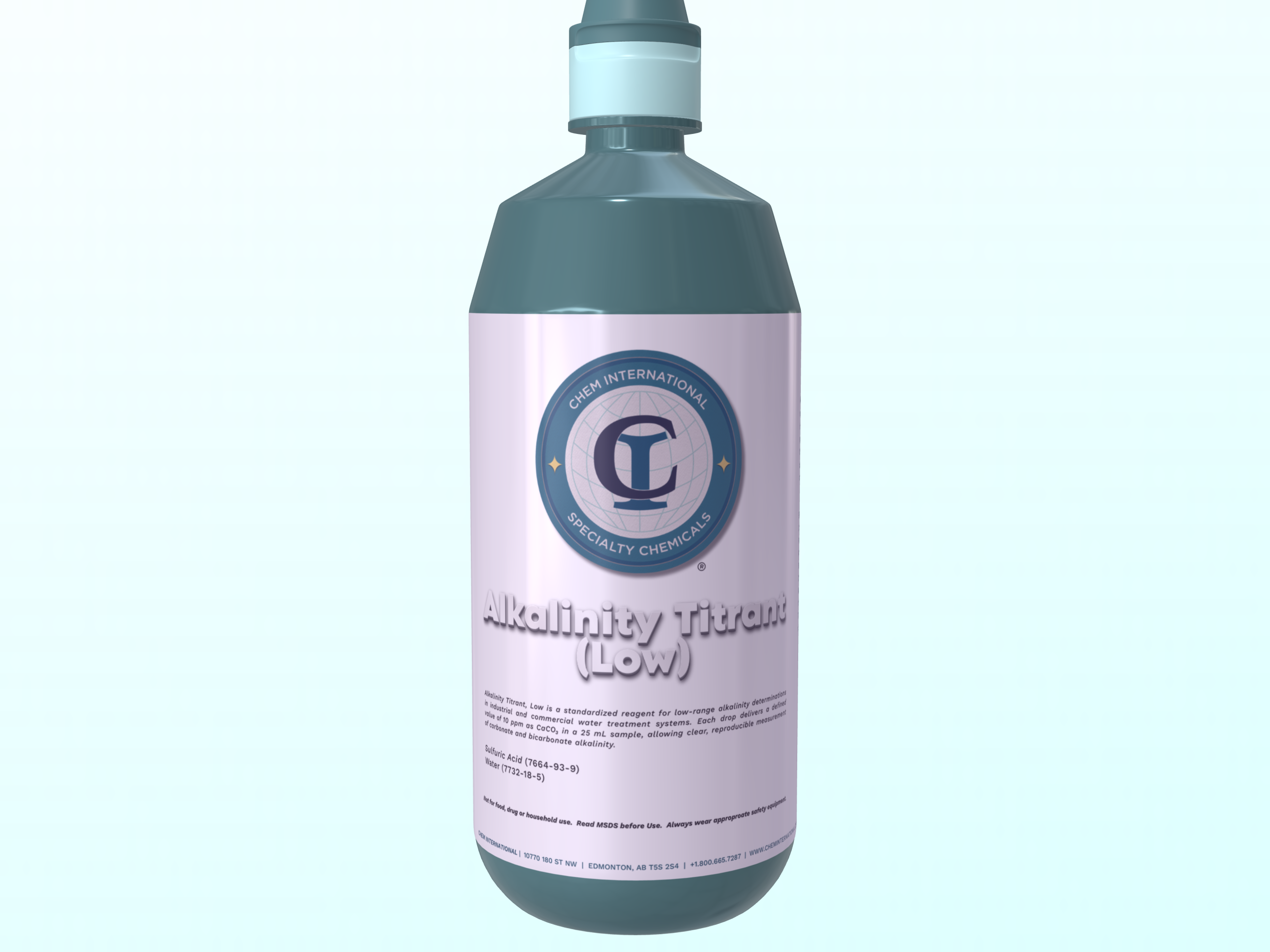
Standardized low-range alkalinity titrant for drop-count measurement of carbonate and bicarbonate alkalinity
CI Alkalinity Titrant, Low is a standardized reagent for low-range alkalinity determinations in industrial and commercial water treatment systems. In a 25 mL water sample , each drop equals 10 ppm alkalinity as CaCO₃ , giving operators a simple, repeatable way to measure carbonate and bicarbonate alkalinity without turning routine field testing into arithmetic.
| 1 L | Enquire |
| 1 L | Enquire |
Standardized low-range alkalinity titrant for drop-count measurement of carbonate and bicarbonate alkalinity
CI Alkalinity Titrant, Low is a standardized reagent for low-range alkalinity determinations in industrial and commercial water treatment systems. In a 25 mL water sample , each drop equals 10 ppm alkalinity as CaCO₃ , giving operators a simple, repeatable way to measure carbonate and bicarbonate alkalinity without turning routine field testing into arithmetic.
CI Alkalinity Titrant, Low is the field and plant titration reagent for operators who need alkalinity numbers they can use immediately. It belongs in routine monitoring programs where carbonate and bicarbonate alkalinity are part of real chemical control, not just recordkeeping.
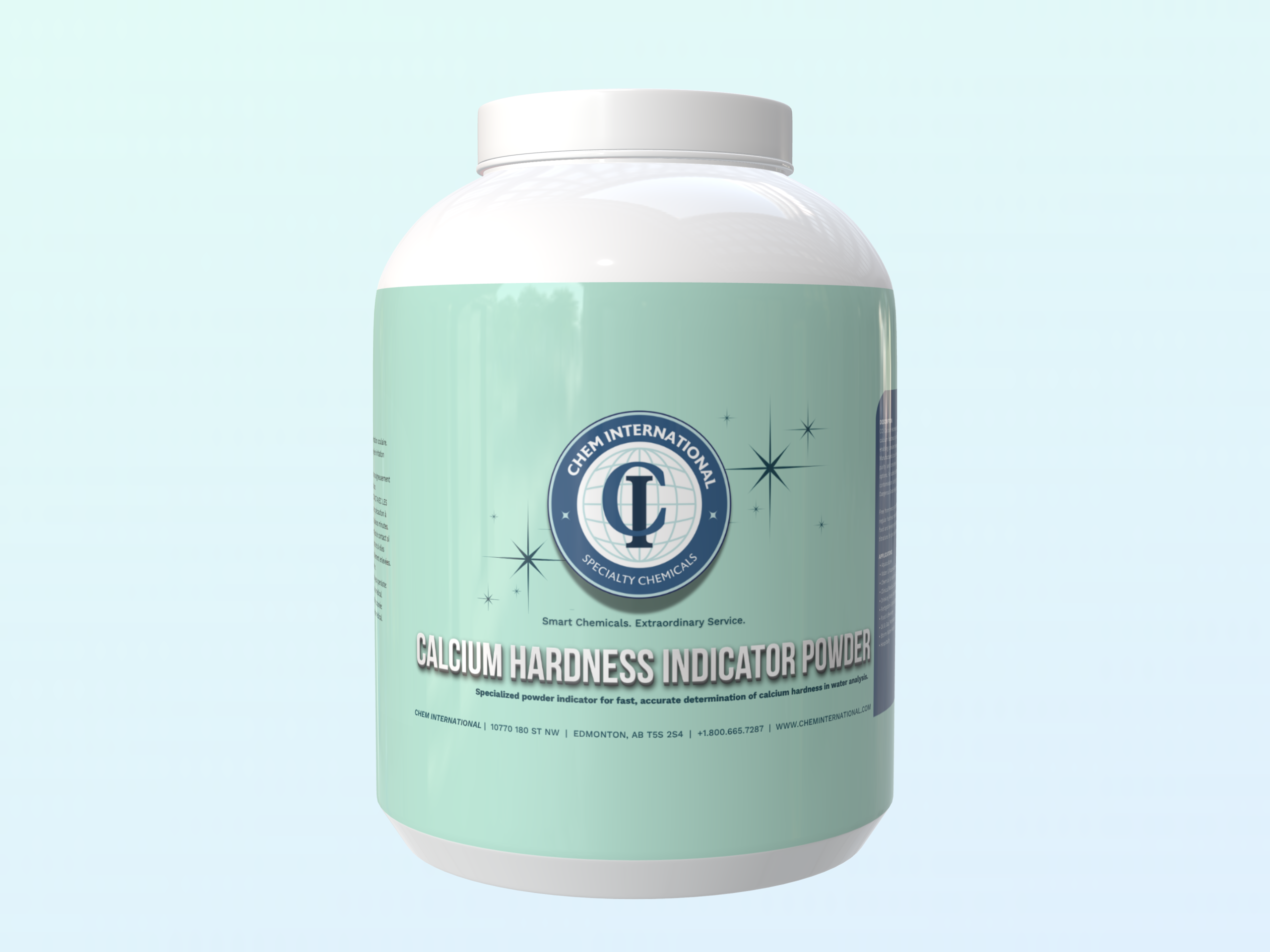
Indicator reagent for calcium hardness determinations in boiler, cooling and closed-loop water testing programs
CI Sulfite Test Kit is a drop-count field test kit for measuring sulfite residual as SO₃ in industrial water systems where sulfite is used to control dissolved oxygen and limit oxygen-driven corrosion. Used on a 25 mL water sample , the test runs by drop-count titration to endpoint, with each drop equal to 6 ppm sulfite , giving the operator a direct check on whether residual is actually sitting inside the intended treatment range.
| Packaging on request | Enquire |
| Packaging on request | Enquire |
Indicator reagent for calcium hardness determinations in boiler, cooling and closed-loop water testing programs
CI Sulfite Test Kit is a drop-count field test kit for measuring sulfite residual as SO₃ in industrial water systems where sulfite is used to control dissolved oxygen and limit oxygen-driven corrosion. Used on a 25 mL water sample , the test runs by drop-count titration to endpoint, with each drop equal to 6 ppm sulfite , giving the operator a direct check on whether residual is actually sitting inside the intended treatment range.
CI Calcium Hardness Indicator Powder is the endpoint reagent for operators and analysts who need calcium hardness titrations to finish cleanly and read consistently. It belongs in water testing programs where hardness numbers are used to guide real treatment and process decisions, not just fill out a log sheet.

Drop-count test kit for sodium nitrite residual in closed-loop heating and cooling systems
Drop-count titration kit for measuring sodium nitrite residual in closed-loop heating and cooling water. Nitrite is the workhorse corrosion inhibitor for ferrous metals in closed loops, and it only protects the system when the residual is held inside the program's target band — too low and corrosion resumes, too high and the operator is overspending on treatment chemistry without added protection.
| Single kit | WT025 |
| Single kit | WT025 |
Drop-count test kit for sodium nitrite residual in closed-loop heating and cooling systems
Drop-count titration kit for measuring sodium nitrite residual in closed-loop heating and cooling water. Nitrite is the workhorse corrosion inhibitor for ferrous metals in closed loops, and it only protects the system when the residual is held inside the program's target band — too low and corrosion resumes, too high and the operator is overspending on treatment chemistry without added protection.
CI Drop-Count Nitrite Test Kit is the field verification tool for nitrite-based closed-loop treatment programs. It tells the operator whether the corrosion inhibitor residual is actually on target, so chemical feed decisions are based on measured reality rather than assumption.

Drop-count field test kit for verifying orthophosphate residual in phosphate-based water treatment programs
CI Orthophosphate Test Kit measures orthophosphate residual as PO₄ in cooling tower water, boiler water, and closed-loop systems. Used on a 25 mL sample with drop-count titration to a colour-change endpoint, it gives the operator a practical field check on whether phosphate residual is sitting inside the intended control band. With a working range to 80 ppm as PO₄ , it is well suited to routine monitoring of phosphate-based treatment programs, including cooling water programs targeting 15–20 ppm as PO₄ .
| Single kit | WT026 |
| Single kit | WT026 |
Drop-count field test kit for verifying orthophosphate residual in phosphate-based water treatment programs
CI Orthophosphate Test Kit measures orthophosphate residual as PO₄ in cooling tower water, boiler water, and closed-loop systems. Used on a 25 mL sample with drop-count titration to a colour-change endpoint, it gives the operator a practical field check on whether phosphate residual is sitting inside the intended control band. With a working range to 80 ppm as PO₄ , it is well suited to routine monitoring of phosphate-based treatment programs, including cooling water programs targeting 15–20 ppm as PO₄ .
CI Orthophosphate Test Kit is the field verification tool for phosphate-based treatment programs. It gives the operator a practical read on whether orthophosphate residual is actually on target, so chemical dosing decisions are based on measured control rather than assumption.
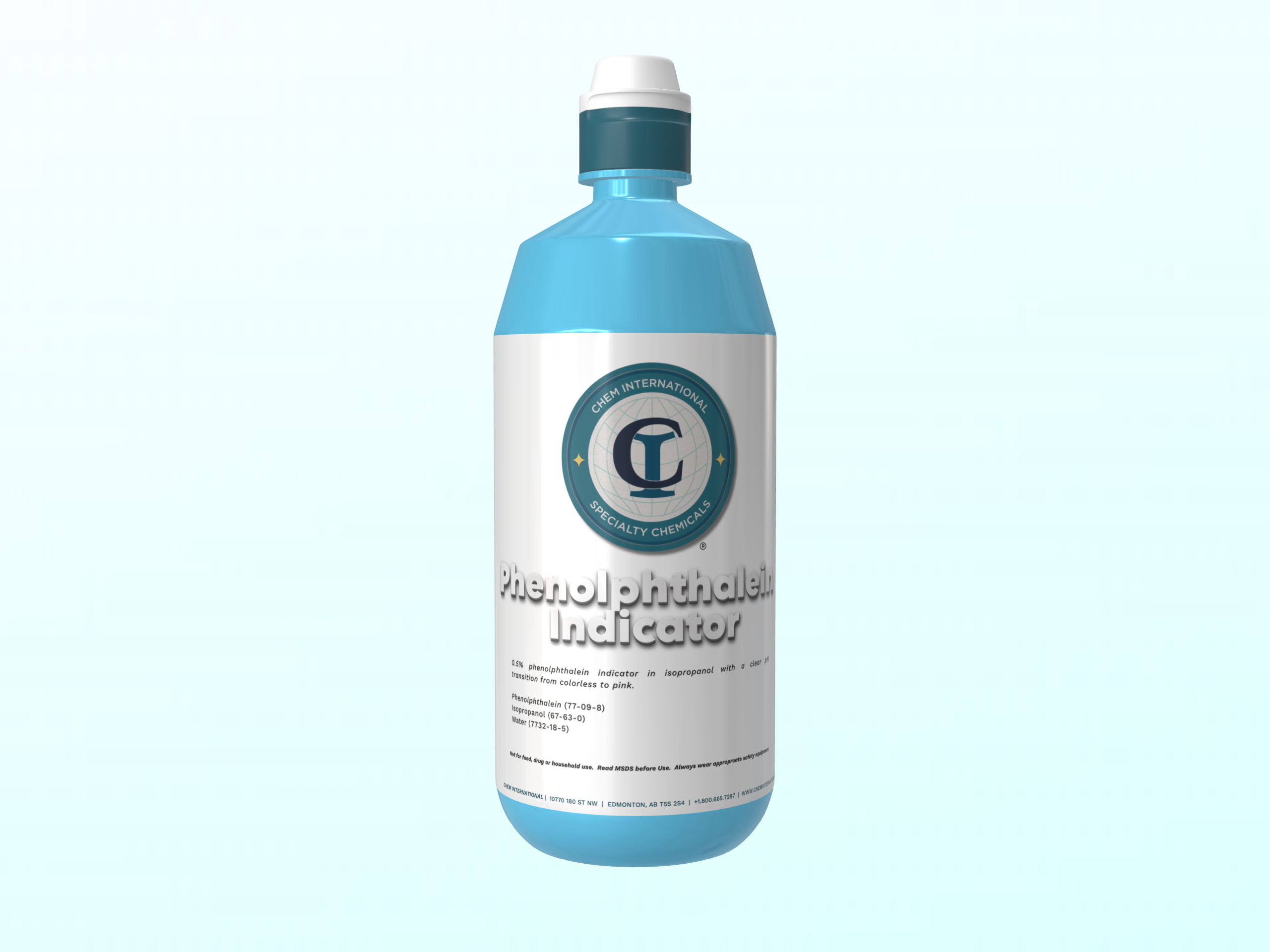
0.5% phenolphthalein indicator for sharp alkalinity and basic-range titration endpoints
CI Phenolphthalein Indicator is a standardized 0.5% w/v solution in isopropanol used in acid-base titrations requiring a clean visual transition from colorless to pink in the pH 8.3 to 10.0 range. It is the endpoint indicator for alkalinity, hydroxide, and carbonate-bicarbonate determinations where a vague colour shift turns a routine test into operator guesswork.
| 1 L | Enquire |
| 1 L | Enquire |
0.5% phenolphthalein indicator for sharp alkalinity and basic-range titration endpoints
CI Phenolphthalein Indicator is a standardized 0.5% w/v solution in isopropanol used in acid-base titrations requiring a clean visual transition from colorless to pink in the pH 8.3 to 10.0 range. It is the endpoint indicator for alkalinity, hydroxide, and carbonate-bicarbonate determinations where a vague colour shift turns a routine test into operator guesswork.
CI Phenolphthalein Indicator is the endpoint reagent for operators and analysts who need moderately basic titration endpoints to break cleanly and read consistently. It belongs in testing programs where alkalinity and related titration numbers are used to guide real treatment and process decisions.

Drop-count test kit for sulfite residual in boiler, cooling, and closed-loop water treatment programs
CI Sulfite Test Kit measures sulfite residual as SO₃ in industrial water systems where sulfite is used to control dissolved oxygen and limit oxygen-driven corrosion. Run on a 25 mL water sample , the test uses drop-count titration to endpoint, with each drop equal to 6 ppm sulfite , giving the operator a direct field check on whether sulfite residual is actually sitting inside the intended treatment range.
| Single kit | WT027 |
| Single kit | WT027 |
Drop-count test kit for sulfite residual in boiler, cooling, and closed-loop water treatment programs
CI Sulfite Test Kit measures sulfite residual as SO₃ in industrial water systems where sulfite is used to control dissolved oxygen and limit oxygen-driven corrosion. Run on a 25 mL water sample , the test uses drop-count titration to endpoint, with each drop equal to 6 ppm sulfite , giving the operator a direct field check on whether sulfite residual is actually sitting inside the intended treatment range.
CI Sulfite Test Kit is the field verification tool for sulfite-based oxygen scavenger programs. It tells the operator whether sulfite residual is actually on target, so feed decisions are based on measured control rather than assumption.
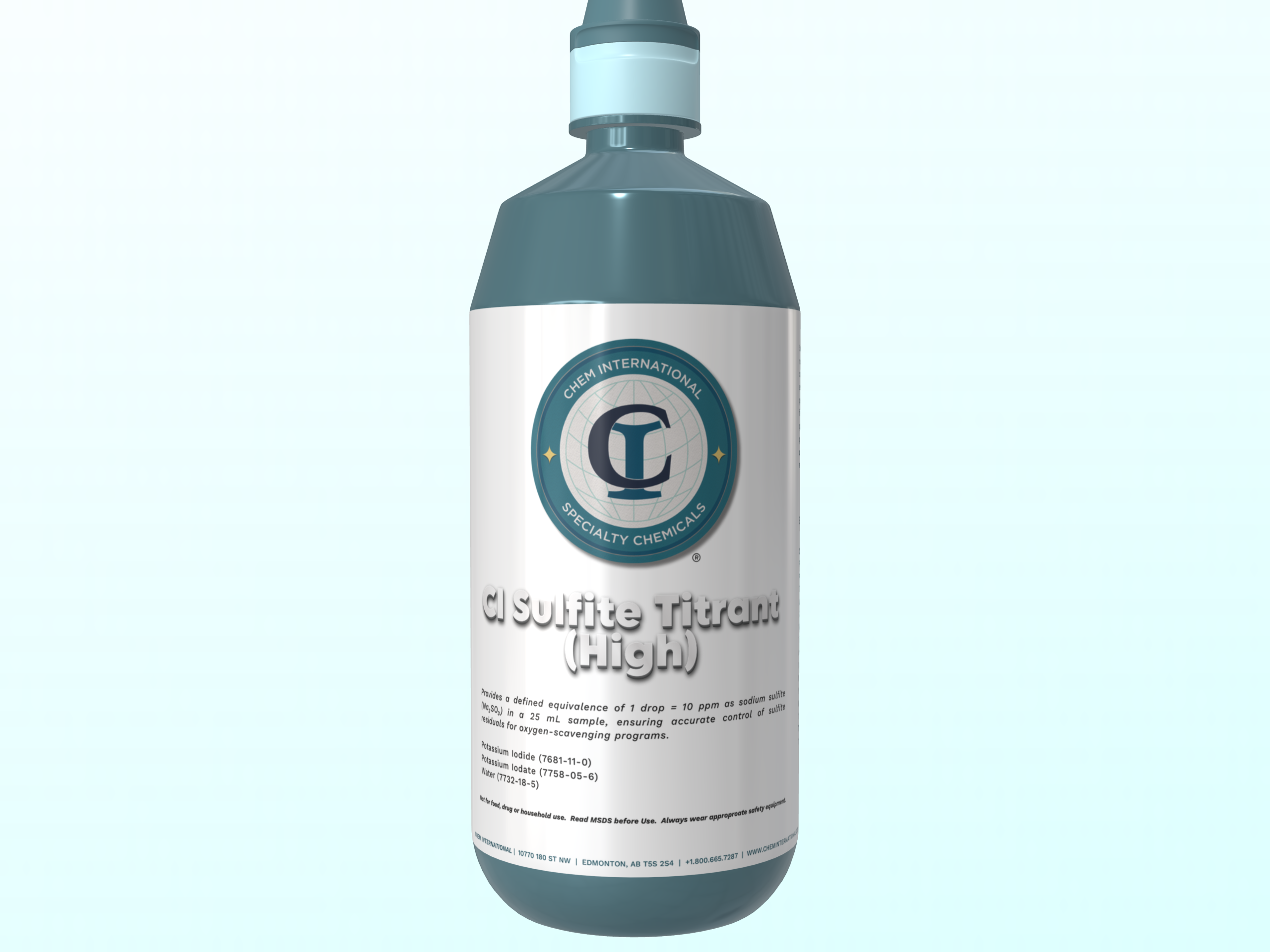
Standardized high-range sulfite titrant for boiler and feedwater residual control
CI Sulfite Titrant High is a standardized analytical titrant for measuring high-range sulfite residuals in boiler and feedwater systems where sodium sulfite is used as an oxygen scavenger. In a 25 mL sample , each drop equals 10 ppm as Na₂SO₃ , giving operators a fast, repeatable way to verify whether sulfite residual is actually sitting inside the intended control range.
| 1 L | Enquire |
| 1 L | Enquire |
Standardized high-range sulfite titrant for boiler and feedwater residual control
CI Sulfite Titrant High is a standardized analytical titrant for measuring high-range sulfite residuals in boiler and feedwater systems where sodium sulfite is used as an oxygen scavenger. In a 25 mL sample , each drop equals 10 ppm as Na₂SO₃ , giving operators a fast, repeatable way to verify whether sulfite residual is actually sitting inside the intended control range.
CI Sulfite Titrant High is the high-range titration reagent for operators who need sulfite residual numbers they can act on quickly. It belongs in routine boiler monitoring and dissolved-oxygen control programs where feed decisions need to be based on measured excess residual, not assumption.
Send us the order codes you need, or describe the facility and our technical desk will map the program with you. Supplied from Edmonton to BC, Alberta and Saskatchewan.
No products in the cart.