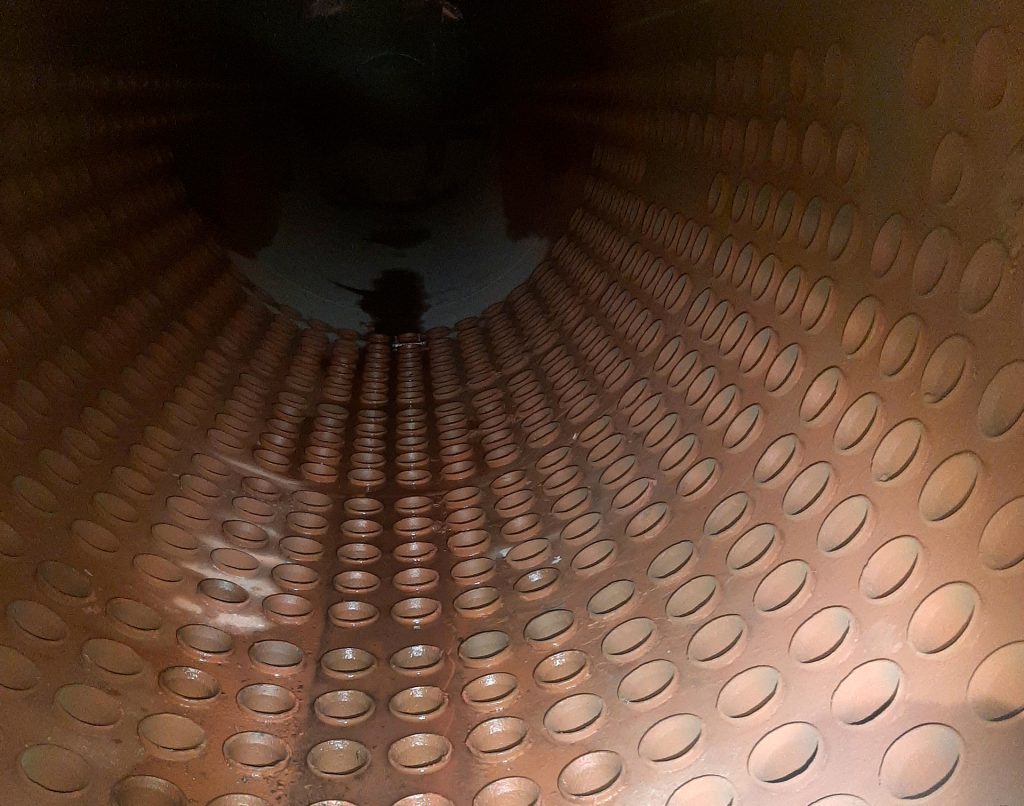
Every boiler carries manufacturing residue—machining oils, flux, assembly compounds, and protective coatings—into commissioning. In closed-loop systems, these contaminants never leave naturally. Without proper cleaning, they deposit on heat transfer surfaces, cause foaming and surging, promote corrosion, and reduce thermal efficiency. The question is not whether to clean, but which cleaner to use. Alkaline and neutral cleaners address this need through fundamentally different chemistry. One is aggressive and fast; the other is gentle and forgiving. Choosing between them requires understanding your system's materials, the nature of the contamination, and your operational constraints.
01 — The Chemistry FundamentalsHow Alkaline and Neutral Cleaners Work Differently
Both alkaline and neutral cleaners remove oils and greases, but they achieve this through different mechanisms operating in different pH ranges. Understanding these differences is essential to making the right choice.
02 — Material CompatibilityWhy Metal Type Determines Cleaner Choice
The materials used in modern boiler construction fall into distinct categories, each with different pH tolerances. Choosing a cleaner without understanding your system's metallurgy is a common source of corrosion failures.
Steel Boilers: Alkaline Cleaning is Appropriate
Traditional boilers constructed entirely from carbon steel, low-alloy steel, or cast iron can safely tolerate alkaline cleaners with pH 10–12. These materials are chemically stable at high pH and benefit from the aggressive degreasing that alkaline cleaners provide. CI BD86 is formulated precisely for this application—new steel boiler installations where rapid, thorough degreasing is needed before the introduction of long-term treatment chemistry.
Steel systems are also appropriate candidates for alkaline cleaning because they can be filled with boiler compounds that maintain pH in the 10–11 range during operation, so the system is already adapted to an alkaline environment.
Aluminum Boilers: Neutral Cleaning is Required
High-efficiency and condensing boilers increasingly use aluminum heat exchangers because aluminum's superior thermal conductivity and corrosion resistance (in neutral environments) deliver measurable efficiency gains. However, aluminum becomes chemically unstable above pH 8–9. Exposure to alkaline cleaners (pH 11–12) causes rapid pitting corrosion—the oxide layer dissolves, the base metal corrodes, and irreversible structural damage occurs within hours.
CI Neutral Boiler Cleaner is specifically formulated for aluminum systems. Its pH of 7.5–8.0 keeps aluminum safe while still delivering effective degreasing through surfactants and chelating agents rather than high pH.
Mixed-Metal Systems: Choose the Lowest Common Denominator
Some facilities operate boilers with both aluminum and steel components—for example, a steel boiler shell with an aluminum heat exchanger insert, or a multi-zone system with different alloys in different sections. In these cases, the cleaner must be safe for the most sensitive material present. This means using neutral cleaner even if pure steel cleaning would benefit from alkaline chemistry.
The performance loss is minimal. Neutral cleaners still remove manufacturing residues and oils; they simply require slightly longer contact time (60 minutes vs. 30 minutes) to achieve equivalent results.
03 — Post-Descaling DecisionsWhy Neutralization Chemistry Is Critical
The cleaner you choose after descaling is as important as the cleaner you choose at commissioning, because acidic descalers leave residual acidity that must be neutralized before long-term treatment chemistry is introduced.
The Descaling–Corrosion Cycle
Acidic descalers (pH 1–3) are used to remove limescale and mineral deposits from boiler water sides. These acids are effective at dissolving calcium carbonate, magnesium salts, and other mineral buildups. However, when the descaling is complete and the acidic solution is drained, significant acid residue remains in the system—clinging to pipe walls, trapped in crevices, and dissolved in the small amount of water that remains in the lowest system points.
If this residual acid is not neutralized promptly, it continues corroding the boiler's internal surfaces. Aluminum systems are particularly vulnerable; they corrode rapidly in acidic environments (pH below 6). Steel systems are more resistant but still at risk if acid is left untreated for extended periods.
Consequences of Skipped or Improper Neutralization
The Neutral Cleaner Advantage in Post-Descaling
CI Neutral Boiler Cleaner serves a dual purpose after acid descaling. First, it neutralizes residual acid—the mild alkalinity (pH 7.5–8.0) reacts with remaining H⁺ ions, bringing the system to a safe, neutral baseline. Second, it removes any debris or corrosion byproducts (iron oxide, aluminum hydroxide) generated during the descaling procedure.
The standard post-descaling protocol is:
- Drain acidic descaler completely. Do not leave any in the system.
- Fill with CI Neutral Boiler Cleaner at 1–2% concentration. Circulate at 120–140°F for 30–60 minutes.
- Monitor pH if possible. Target 7.5–8.5 before proceeding.
- Drain neutral cleaner. Check the drain liquid for cloudiness or iron coloration—this indicates how much corrosion byproduct is present.
- Final rinse with soft or deionized water.
- Introduce long-term treatment chemistry immediately. Do not leave the system empty or with untreated water.
04 — Selection Decision TreeHow to Choose the Right Cleaner for Your System
The correct cleaner depends on three factors: the boiler's material composition, the age and condition of the system, and whether you are commissioning or post-descaling. Use this framework to determine your choice:
Scenario 1: New Steel Boiler Installation (Commissioning)
Scenario 2: New Aluminum or Condensing Boiler Installation (Commissioning)
Scenario 3: Post-Acid Descaling (Any System)
Scenario 4: Mixed-Metal System with Uncertainty
05 — Practical ApplicationStep-by-Step Procedures for Both Cleaners
Alkaline Cleaner Procedure (Steel Systems with CI BD86)
- Prepare the system. Ensure all vents are open, all drain valves are closed except one monitoring point, and all zones are accessible for circulation.
- Fill the system with fresh water. Add CI BD86 at 1–2% by volume. For example, add 5 gallons of CI BD86 per 250–500 gallons of system volume.
- Circulate at moderate temperature (160–180°F) for 30–90 minutes. Begin circulation, gradually bring temperature up. Monitor for foaming—foam indicates heavy organic residue being removed. Foaming is normal and expected.
- Observe the circulating water for discoloration. Clear liquid or light tan color indicates low contamination. Dark or black color indicates heavy oils or machining residues still being dissolved.
- After contact time, drain completely. Ensure the system is emptied to the lowest accessible point.
- Rinse with fresh water. Refill, circulate briefly at 100°F without the cleaner, then drain. Repeat until drain liquid is clear.
- Fill with long-term boiler compound. Do not delay this step. A cleaned but untreated system will begin corroding immediately.
Neutral Cleaner Procedure (Aluminum or Commissioning with CI Neutral Boiler Cleaner)
- Prepare the system the same way as with alkaline cleaner. Open vents, close drain valves except one monitoring point.
- Fill with fresh water and add CI Neutral Boiler Cleaner at 0.5–1% by volume. For example, add 2.5 gallons of CI Neutral Boiler Cleaner per 500 gallons of system volume for commissioning, or 5 gallons per 500 gallons for post-descaling neutralization.
- Circulate at moderate temperature (120–160°F) for 30–60 minutes. Circulate steadily. You may see slight foaming, but it is typically less dramatic than with alkaline cleaners.
- Monitor pH if possible. Use a calibrated pH meter. Target pH is 7.5–8.5. If pH is below 7 (especially post-descaling), extend circulation time to allow full neutralization.
- After contact time, drain completely. Observe the drain liquid. Cloudiness or tan/iron coloration indicates residual corrosion byproducts or iron—normal after post-descaling cleaning.
- Rinse thoroughly with soft or deionized water if possible. Hard water will immediately deposit fresh scale. Refill, circulate briefly, and drain until water is clear.
- Introduce long-term boiler compound immediately. The protective film deposited by CI Neutral Boiler Cleaner will support the treatment chemistry's ability to establish protection.
06 — TroubleshootingCommon Issues and How to Address Them
Heavy Foaming During Circulation
Likely cause: Significant organic residue (machining oils, assembly compounds, protective coatings) is being removed and surfactants are agitating it.
What to do: Reduce circulation flow or temperature slightly to minimize agitation. Foaming is not harmful, but excessive foam can cause system overflow. If foam reaches drain vents or high points, stop circulation, allow foam to subside, then resume at reduced flow.
Drain Liquid is Very Dark or Black (After Alkaline Cleaning)
Likely cause: Very heavy machining oils or old protective coatings being dissolved.
What to do: This is normal for heavily contaminated systems. Extend contact time by 30–60 minutes if the drain liquid is still dark at the end of your planned circulation time. The longer contact allows more residue to be removed. Rinse thoroughly before introducing treatment chemistry.
pH Does Not Rise After Adding Neutral Cleaner (Post-Descaling)
Likely cause: Significant residual acid still present in the system. The buffering capacity of CI Neutral Boiler Cleaner is being consumed by the acid.
What to do: Continue circulating for 45–60 minutes instead of 30 minutes. The cleaner needs more time to neutralize the acid. After extended circulation, drain and refill with fresh neutral cleaner at the same dosing, and repeat the 30-minute circulation. This two-stage approach ensures complete neutralization.
Drain Liquid is Cloudy or Discolored After Neutral Cleaning
Likely cause: Suspended corrosion byproducts (iron oxide from steel systems or aluminum hydroxide from aluminum systems) or residual minerals.
What to do: This is normal and expected, especially post-descaling. Rinse the system thoroughly with soft or deionized water to remove these particles before introducing treatment chemistry. If cloudiness persists after two rinses, allow the system to stand for 2–4 hours to allow particles to settle, then carefully drain from the lowest point.
07 — Cost and EfficiencyWeighing Cleaner Choice Against System Protection
The product cost difference between CI BD86 (alkaline) and CI Neutral Boiler Cleaner is small—typically $20–40 per system depending on size. The operational and risk cost difference is substantial.
Choosing alkaline cleaner for an aluminum system: You save $20 on chemistry and 30 minutes on circulation time. You risk corrosion damage worth $2,000–5,000 in premature equipment replacement or emergency repair. This is a poor trade.
Choosing neutral cleaner for a steel-only system: You add $20 in chemistry and 30 minutes to circulation time. You gain material compatibility certainty. If you ever service this system again or add aluminum components (condensing heat exchanger retrofit), the neutral chemistry baseline is already established. This is a smart hedge against future uncertainty.
The practical recommendation: Use CI Neutral Boiler Cleaner for all commissioning unless you are absolutely certain the system contains only steel with no aluminum or sensitive components, and unless you have documentation that the system is designed for alkaline chemistry. The flexibility and safety margin are worth the modest cost difference.
08 — ConclusionChemistry Choice = System Durability
Alkaline and neutral cleaners both remove manufacturing residue effectively. The difference is not whether they work, but which systems they work safely on. Alkaline cleaners deliver rapid, aggressive degreasing suited to pure-steel systems. Neutral cleaners deliver adequate degreasing safely suited to aluminum or mixed-metal systems.
The cleaner you choose at commissioning and post-descaling sets the tone for your system's entire operational life. A correct choice ensures clean startup and long-term reliability. An incorrect choice introduces corrosion damage that accelerates in its early stages and becomes irreversible by the time it is detected.
Know your system's materials. Choose the appropriate chemistry. Execute the procedure properly. Your boiler's durability depends on these three steps.